

The product design landscape is changing faster. AI is playing a major role in the process. Due to AI, designers are working smarter, not harder. Whether you’re building products or prototypes, AI can accelerate workflows, save money and unearth entirely new ways of innovating.
These are now must-have tools for a designer who intends to be competitive and deliver quality results. In this guide, we’ll take an in-depth look at the top AI tools for product design and break down why this technology is taking over.
To avoid AI detection, use Undetectable AI. It can do it in a single click.
Table of Contents
What Are AI Tools for Product Design?
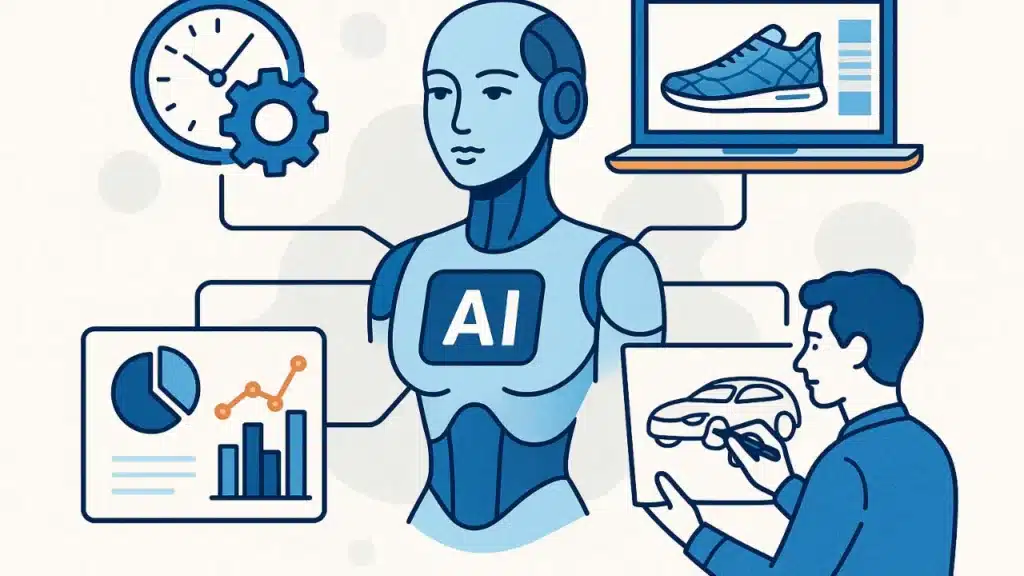
AI tools for product design leverage AI (like machine learning, generative AI and automation) to help designers develop, enhance and test concepts for products. These tools are capable of distinguishing patterns, processing information, expressing new concepts and doing jobs that take many hours to do by hand.
In product design, AI can aid throughout the process of sketch, concept ideation, 3D model production, prototype testing and UX Design and simulation, as well as market research. AI can quickly develop design variations, anticipate user preferences, critique weaknesses and even optimize the materials used.
This makes the entire design process smarter, faster and more seamless.
AI tools augment the designer’s creativity by taking over grunt work and offering smart suggestions. Designers are able to spend more time on innovating, problem-solving and designing user centered products in the long run.
Benefits of Using AI in Product Design
Now AI is changing the way we think about product design. The following are the main advantages of using AI in product design:
- AI can produce several design ideas and concepts in minutes, minimizing the need for brainstorming by hand and sketching.
- Mundane operations like resizing, layout adjustment or testing designs can be automated using AI.
- AI-driven 3D modeling and simulation tools can assist in detecting design errors at an early stage.
- AI can help decision making for product design by presenting insights of market trends, customer behaviors and product performance data, so that the final products are more useful for those who need them.
- AI helps people predict what a user will want to do and in designing products that are more user-friendly, attractive or functional.
- Quicker prototyping, error detection and automation help cut down production time and cost, helping companies get products to market faster.
- AI-generated suggestions and alternatives will help designers to think out of the box.
Top AI Tools for Product Design (2025 Updated)
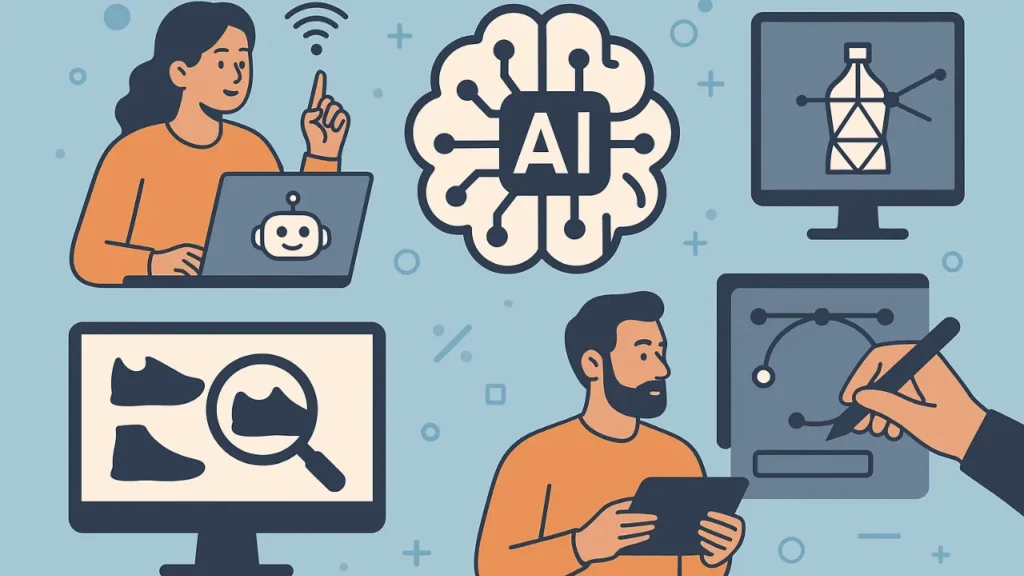
Here’s a list of some of the most powerful AI tools in 2025 for product designers, depending on whether you are crafting visual concepts, UI/UX, prototypes or final design assets:
Adobe Firefly
A generative‑AI engine inside the Adobe Creative Cloud. It sounds a bit like magic, but it actually allows you to generate images by simply describing a dot-notation of what should be there.
This can be used for text-to-image synthesis, smart editing (such as removing/replacing backgrounds or tweaking photorealistic image), generating design mockups and more.
Ideal for: Visual ideas generation, marketing visuals, product mockups, branding assets.
Figma (with AI Plugins/AI Features)
Figma’s AI features and plugins helps to automate the design of UIs, generate layout recommendations, build wireframes from ideas/text‑descriptions, and expedite UI/UX workflows.
Ideal for: UI/UX design, web / mobile app prototyping, collaborative design work, and fast iteration.
Uizard
Uizard is capable of turning (even hand‑drawn) sketches or rough ideas into clickable prototypes or mockups due to AI. Useful if you want to rapidly turn ideas into digital design drafts.
Ideal for: Quick prototyping, MVP design, early‑stage UX / UI designs particularly for non‑designers or small teams.
Khroma
Khroma is an AI powered tool for creating custom color palettes tailored to your liking. It aids in picking color schemes to match your brand or design aesthetic, something that is often an afterthought but critical in product design.
Ideal for: Branding, UI theme design, color‑consistency, and aesthetic design decisions.
Midjourney (and Similar Text-to-Image AI, Concept Generators)
Tools like Midjourney (or other stuff doing generative AI) are used to build high-quality concept art, moodboards, and visual inspiration. It is useful especially in early design phases or when designing and visualizing product look & feel.
Ideal for: Ideation, moodboards, visual style discovery before detailed design.
Autodesk Fusion 360 (and AI-Augmented CAD/3D Tools)
For physical goods or 3D modeling, CAD and 3D software such as Fusion 360 (with AI-powered simulation & modeling) automate elements of the design, material and engineering process.
Ideal for: Industrial design, product engineering, 3D prototypes, mechanical/physical products design.
Which Tool for Which Purpose – Quick Guide
| Your Goal/Stage | Recommended Tools |
| Fast visual mockups / branding / marketing images | Adobe Firefly, Midjourney, Khroma |
| UI / UX / Web / App design & prototyping | Figma (+ AI), Uizard, Khroma |
| Early‑stage concept art, moodboards, visual ideas | Midjourney, Adobe Firefly, Khroma |
| 3D modelling, physical product design, CAD / engineering | Autodesk Fusion 360 (or similar) |
| Rapid prototyping with minimal design skill | Uizard, Figma AI plugins |
Best Use Cases of AI in Product Design

AI is a game-changer in terms of how products are conceived, designed, prototyped and tested.
Below are the best use cases of AI in product design:
Concept Sketching and Idea Generation: AI tools can rapidly generate numerous design concepts in response to a single prompt or idea. Designers can iterate, try new styles and find the best design faster than hand-drawing.
3D Modeling and Prototyping: CAD and 3D tools with AI assistance aid in designing precise 3-dimensional models and prototypes. They can automate repetitive modeling tasks, help optimize designs towards optimal performance goals, and simulate how products will work in the real world.
User Experience (UX) and Interface Design: AI can process user actions and tell you what users will do with your product. UI layouts, wireframes, and responsive designs that improve the user experience can be automatically created by tools.
Material and Component Selection: For physical products, AI can also recommend the best possible materials and components based on durability, cost and sustainability. Due to this smarter and efficient designs are produced.
Rapid Iteration and Testing: AI speeds up testing by virtually simulating a product’s performance, forecasting defects and recommending changes.
Market Trend Analysis: AI can analyze trends, competition and customer feedback to aid designers in building products that fit the market and consumers’ tastes.
Visual Concept Visualization: Generative AI tools such as Midjourney or Adobe Firefly can also be helpful in creating realistic product visuals, moodboards, and marketing images to make the final design more understandable for both team and client.
Error Detection and Optimization: AI finds design discrepancies, structural weaknesses or usability problems. This allows avoiding expensive mistakes and achieves a better final product.
How to Choose the Right AI Tools for Product Design?
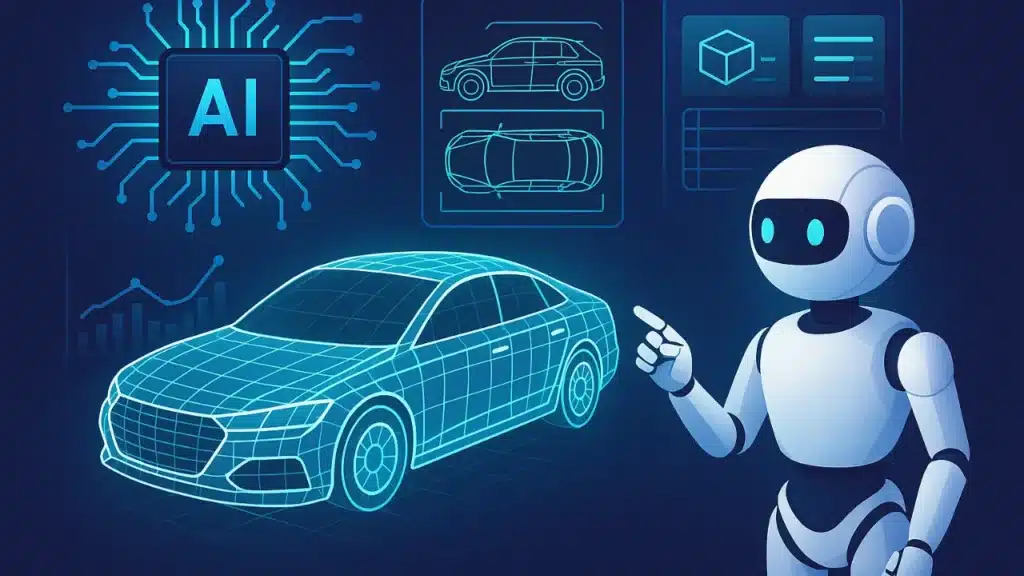
Choosing the perfect AI tools for product design is not straightforward and depends on multiple variables.
Below is a guide to help you make wise choices:
- Define your project type and goals
- Assess your skill level and workflow
- Consider budget and pricing model
- Evaluate integration and compatibility
- Identify required features and customization
- Consider speed versus quality versus control balance
- Check community and support ecosystem
- Start small and trial & experiment
FAQs: AI Tools for Product Design
Can AI tools be used by a beginner in product design?
Yes. However, many AI tools are aimed at beginners. They also give you templates, auto-generated layouts and simple-to-use drag-and-drop functionality. Anyone can drag and drop elements in the design to develop mockups, prototypes, and visual concepts in minutes.
Will product designers be replaced entirely by AI?
No AI makes the design process better and faster but it can never replace humbleness, creativity, problem solving or understanding of user needs. Designers employ AI as a powerful assistant rather than substitute to develop ideas and workflow.
What are some good AI tools to make 3D product models?
For 3D modeling and physical product design, tools such as Autodesk Fusion 360, Adobe Firefly, or Figma are great. They automate many of the routine tasks involved in modeling, flags design flaws and aids in simulating a product’s performance.
Conclusion: AI Tools for Product Design
AI tools can enhance creativity and speed, as well as accuracy and efficiency overall. From creating early concept ideas, to 3D modeling, user interface (UI) design or market trend analysis, AI allows designers to work smarter and produce superior results.
AI can’t be creative or make judgments like a human designer. With the right set of tools and incorporating them in your workflow, you can design user-centric products more quickly than ever. AI is going to play an increasing role in product design in the future.
Read Also:
Getting Started with Midjourney Cartoon Prompts
How to Avoid AI Detection in Essays?
New AI Tool Helps Doctors Diagnose Brain Tumors During Surgery


